


Learning how to find the best online deals is about more than spotting a large percentage-off banner.
A product marked “50% off” is not necessarily a better deal than another retailer selling the same item at a lower regular price. Shipping costs, coupon codes, limited-time promotions, bundle offers, return policies, and even the original price can all affect what you actually pay.
When you know how to find the best online deals, the goal is to look at the final value of the purchase, not just the discount displayed on the screen.
Whether you’re shopping for clothing, electronics, wellness products, travel, home goods, or everyday essentials, a few simple habits can help you find better offers and avoid buying something simply because it appears to be on sale.
Affiliate Disclosure: Some links on DisOffers360 are affiliate links. If you make a purchase through one of these links, we may earn a commission at no additional cost to you. Our editorial content and recommendations are not affected by these commissions.
What Makes an Online Deal Worth Buying?
A genuine deal should give you a meaningful reason to buy at that particular price.
That doesn’t necessarily mean the biggest percentage discount. A smaller discount on something you already need can be more valuable than a huge discount on something you don’t need.
Before buying, consider:
- Is the product something you actually want or need?
- Is the current price competitive?
- Is there an active coupon code?
- Can you get free or discounted shipping?
- Are there additional promotions available?
- Does the retailer have a reasonable return policy?
- Is the sale price available for a limited time?
- Are you comparing the final price rather than just the advertised discount?
The goal is simple: find the best overall value, not simply the biggest-looking discount.
That also means understanding the product before deciding whether its price is attractive. If you’re shopping for a tuning fork, for example, our guide on How to Choose a Tuning Fork: Frequencies, Sets & Buying Tips explains what to consider when comparing frequencies, weighted and unweighted designs, individual forks, and sets.
Start by Comparing the Final Price
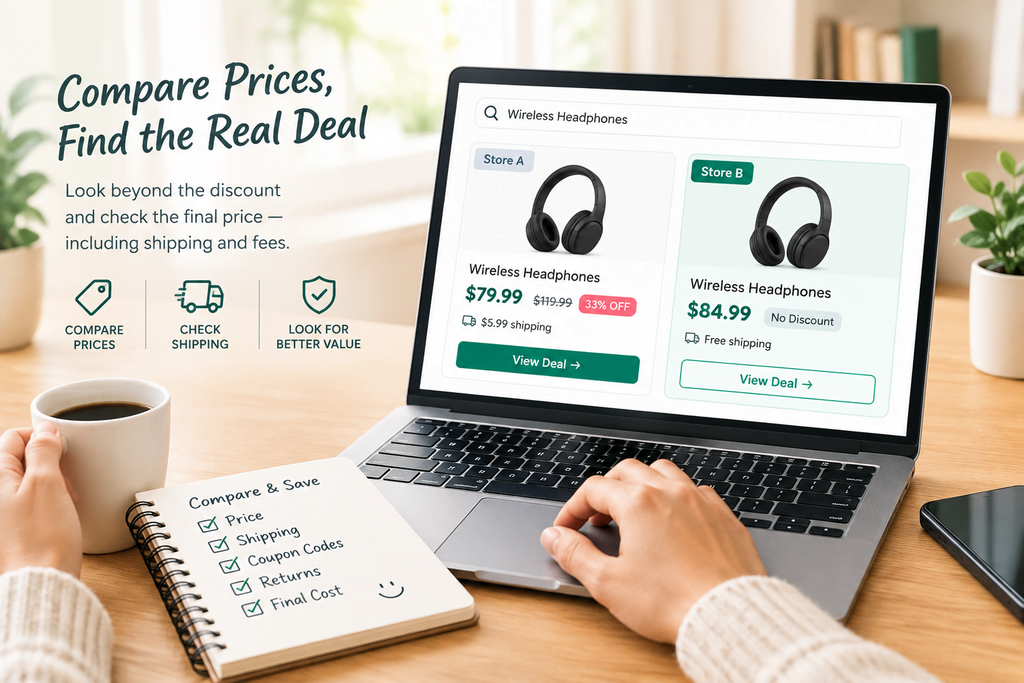
One of the easiest ways to improve your online shopping is to compare prices before placing an order.
A retailer may advertise a product as being 30% off, while another store may sell a similar product for less without using a large discount label.
For example, imagine one store lists an item at $100 and reduces it to $70. Another retailer lists the same item at $75 but offers free shipping.
The first store appears to have the better discount, but the second option could have the lower final cost depending on shipping and other fees.
When comparing offers, look beyond the headline price.
Check:
Product price + shipping + applicable fees − available discounts = your actual cost
This simple calculation can make it easier to identify which offer is genuinely better.
Look for Coupon Codes Before You Buy
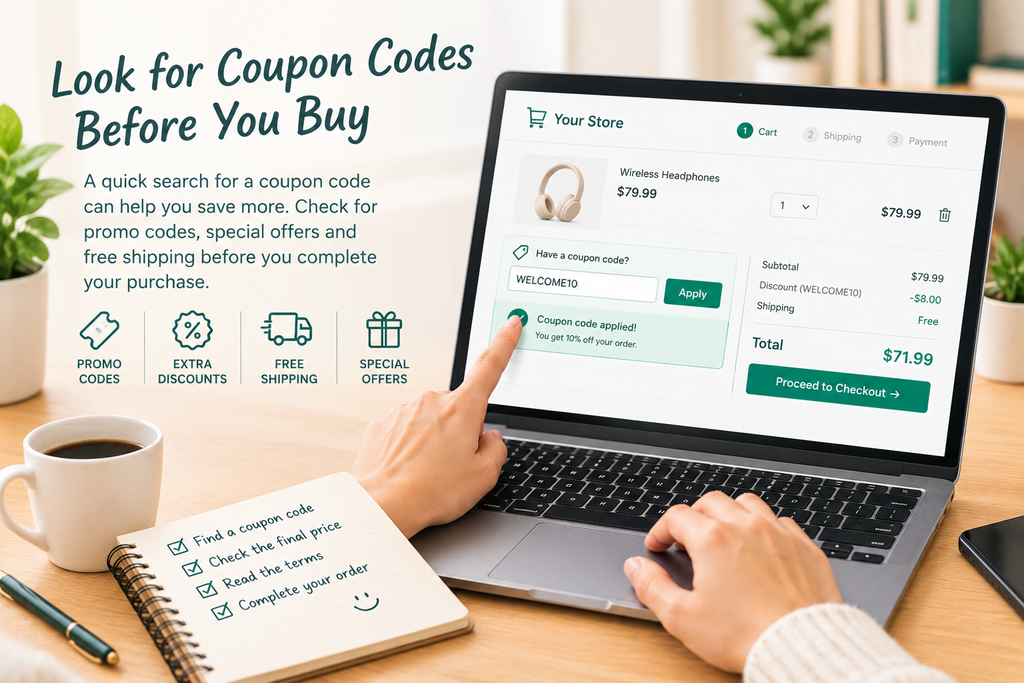
If you’ve already decided what you want to purchase, checking for a coupon code before completing your order can be worthwhile.
Many retailers use promotional codes for things such as:
- Percentage discounts
- First-order savings
- Seasonal promotions
- Free shipping
- Category-specific discounts
- Limited-time offers
- Special customer promotions
A coupon code may be displayed directly on the retailer’s website, included in an email promotion, or listed on a coupon and deals site.
Before using a code, always check the terms. Some codes may only work on selected products, require a minimum purchase, or be limited to new customers.
You can browse Pure Frequencies coupons, promo codes and deals on DisOffers360 when shopping for that retailer, for example. The same approach can be used when researching offers from other stores.
Check Whether a Sale Price Is Really a Discount
A percentage-off label can be useful, but it shouldn’t be the only thing you consider.
Retailers may display a current price alongside a higher reference price to show the apparent savings. That can make a deal look more impressive at first glance.
Instead of asking:
“How much percentage off is this?”
ask:
“Is this a good price for this product right now?”
If possible, compare the item with other retailers or check how the price has changed over time.
This is especially useful for larger purchases. A few minutes of research can help you understand whether you’re looking at a meaningful promotion or simply a standard price presented as a sale.
Look for Extra Savings You Can Stack
Sometimes the advertised promotion isn’t the only saving available.
Depending on the retailer’s rules, you may find opportunities to combine a sale price with another promotion, such as:
- A coupon code
- Free shipping
- A first-order discount
- A bundle offer
- A retailer promotion
- A loyalty benefit
- A payment-related promotion
However, not every promotion can be combined.
For example, if you’re considering a product that’s already on sale, check the retailer’s own product page for the current price and any restrictions before assuming an additional coupon will apply. You can review the current Pure Frequencies Harmony Tuning Fork Set offer directly on the retailer’s website.
Always check the retailer’s terms before assuming two offers can be stacked.
For example, if a product is already reduced from $145 to $89.95 and a retailer provides an additional 10% coupon for eligible purchases, the final price could be lower than the advertised sale price.
The important word is eligible. Don’t advertise a combined saving unless the retailer’s terms or your own testing confirms that the offers work together.
Check Shipping, Returns and Other Costs
A low product price isn’t always the lowest overall cost.
Before you place an order, look at shipping charges and any other costs that could affect the final amount.
For more general guidance on comparison shopping, shipping, returns, and evaluating online offers, the Federal Trade Commission’s online shopping guide is also a useful reference.
Also check the return policy, particularly when you’re buying clothing, electronics, home products, or anything where fit or compatibility matters.
Questions worth asking include:
- Is shipping free?
- Is there a minimum order for free shipping?
- How much does standard shipping cost?
- Are international shipping charges applicable?
- Can the item be returned?
- How long do you have to return it?
- Are return shipping costs deducted from your refund?
A slightly more expensive product with free shipping and a straightforward return policy can sometimes represent better value than a cheaper product with expensive shipping or restrictive returns.
Use Store Sales and Promotions Strategically
Many retailers run seasonal sales throughout the year.
Common examples include:
- End-of-season sales
- Holiday promotions
- Back-to-school offers
- New-year promotions
- Black Friday and Cyber Monday
- Anniversary sales
- Clearance events
- New-customer promotions
If you’re comparing several products from the same retailer, it can also help to understand the differences between the options before deciding which one offers the best value. For example, our Pure Frequencies Harmony vs Serenity vs Grounded comparison looks at the differences between three tuning fork sets to help shoppers understand what each one offers.
You don’t necessarily have to wait for a major shopping event, though.
Retailers may introduce short-term promotions at other times, particularly when launching products, clearing inventory, or promoting a specific category.
If you’re planning a purchase rather than buying immediately, it can be useful to monitor the retailer for a while and compare the offers that appear.
Don’t Buy Something Just Because It’s on Sale
This may be the most important shopping tip of all.
A 70% discount is still money spent.
If you weren’t interested in the product before seeing the promotion, ask yourself whether the discount is actually creating value or simply encouraging an unplanned purchase.
A useful test is:
Would I still want this product if it weren’t on sale?
If the answer is no, take a moment before buying.
The best deals are often the ones that save you money on something you were already planning to purchase.
How to Find Deals on Products You Actually Want
Instead of starting with a discount and trying to find something to buy, reverse the process.
If you’re researching a specific product category before shopping, a useful buying guide can also help you understand what to look for before you start comparing prices. For example, our Pure Frequencies Tuning Forks: 7 Essential Tips for Beginners guide explains the basics of tuning forks, including different sets, frequencies, and weighted versus unweighted designs.
Step 1: Decide what you need
Start with the product, category, or service you’re actually looking for.
Step 2: Compare retailers
Check several retailers where the product is available.
Step 3: Compare the final prices
Include shipping and other relevant costs.
Step 4: Search for available promotions
Look for sale prices, coupon codes, first-order offers, and other promotions.
Step 5: Read the terms
Make sure the offer applies to the product you’re buying.
Step 6: Check the retailer
Look at shipping, returns, availability, and other purchase conditions.
Step 7: Decide whether the purchase makes sense
If the price and terms look good and it’s something you actually need, you’re in a much better position to make an informed purchase.
A Simple Online Deal Checklist
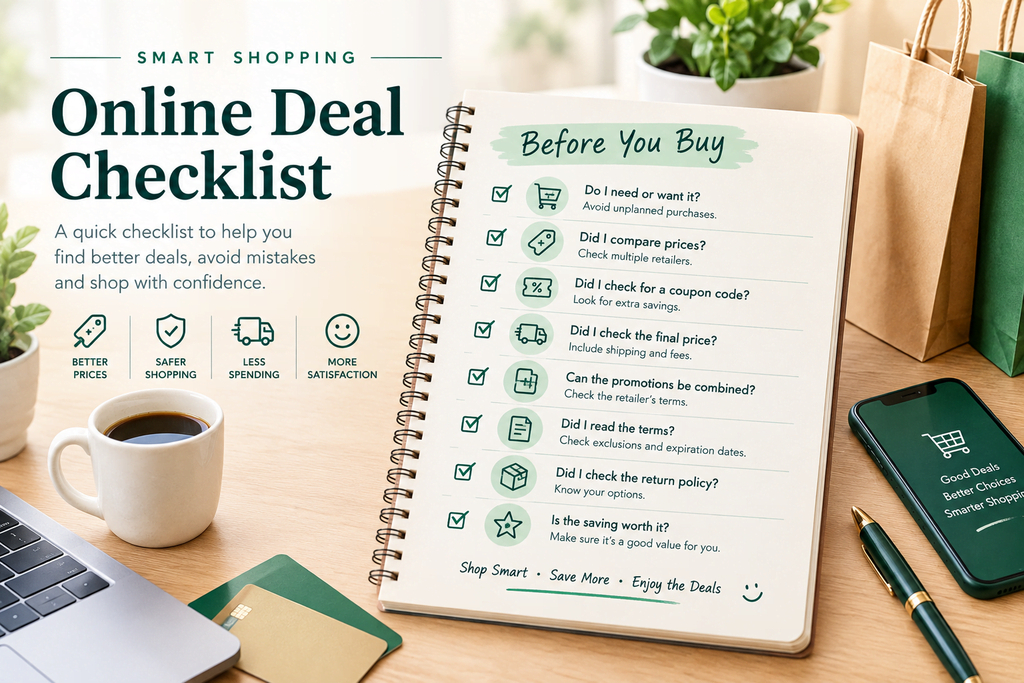
Before clicking the final Buy button, run through this quick checklist:
1. Do I actually need or want it?
Avoid buying something solely because the discount looks large.
2. Did I compare prices?
Check whether another retailer offers a better overall price.
3. Did I check for a coupon code?
A valid code may provide additional savings.
4. Did I check the final price?
Include shipping and other applicable costs.
5. Can the promotions be combined?
Don’t assume that multiple offers will stack.
6. Did I read the terms?
Check expiration dates, exclusions, minimum purchases, and eligibility.
7. Did I check the return policy?
This can be particularly important for higher-value purchases.
8. Is the saving worth it?
A discount only matters if the purchase itself makes sense.
How to Find the Best Online Deals and Coupons
Once you know what you’re looking for, coupon and deals websites can make the research process easier by bringing promotions together in one place.
On DisOffers360, we cover coupons, promo codes, deals, shopping ideas, and buying guides across different retailers and product categories.
For example, shoppers interested in tuning forks and sound-based wellness products can explore our Pure Frequencies coupons, promo codes and deals page for current offers and promotions.
We also publish shopping guides designed to provide useful information before you buy, rather than simply listing discount codes.
That distinction matters because finding a coupon is only one part of smart shopping. Understanding the product, comparing options, and checking the terms can be just as important.
How to Avoid Misleading Online Deals
Not every promotion is equally useful, so it’s worth approaching online deals with a little skepticism.
Be cautious when you see:
- Extremely large discounts without clear pricing information
- Countdown timers that create unnecessary urgency
- Offers with unclear terms
- Coupon codes that have no stated expiration or conditions
- Prices that seem unusually low compared with other retailers
- Products with very limited information
- Promotions that make unrealistic claims
A good deal should still make sense after you look at the details.
If a promotion requires you to rush into a purchase without enough information to evaluate it, taking a step back is often the better choice.
Should You Wait for a Better Deal?
Sometimes waiting makes sense, but there’s no guarantee that a lower price will appear.
If you’re buying a product you need soon, the best decision may be to purchase when you find a price you’re comfortable with.
For non-essential purchases, however, monitoring prices can be useful.
You might notice:
- A new coupon code
- A seasonal promotion
- A lower sale price
- Free shipping
- A bundle promotion
- A retailer-wide discount
The right approach depends on the product and how urgently you need it.
What About “Up to” Discounts?
Pay attention to wording such as “up to 50% off.”
This does not necessarily mean every product is 50% off.
Usually, “up to” means the highest discount applies to selected products, while other items may have smaller discounts or no discount at all.
Before assuming you’ll receive the advertised maximum saving, check which products actually qualify.
This is another reason why looking at the specific product price is more useful than relying solely on the headline promotion.
Final Thoughts
Knowing how to find the best online deals doesn’t require chasing every sale or searching endlessly for the biggest discount.
A better strategy is to shop with a process.
Start with something you actually want or need. Compare prices, check the final cost, look for coupon codes and promotions, read the terms, and consider shipping and returns before making your decision.
Most importantly, don’t let a large discount persuade you to buy something that doesn’t provide value to you.
The best online deal isn’t necessarily the one with the biggest percentage printed next to it.
It’s the offer that gives you the right product at a price you’re comfortable paying, with terms that make sense.
Frequently Asked Questions
How do I find the best online deals?
Start by deciding what you want to buy, then compare prices across retailers. Check for coupon codes, sale prices, free shipping, and other promotions before comparing the final cost.
How can I tell if an online discount is a good deal?
Compare the current price with other retailers and, when possible, previous prices. Also consider shipping, return policies, and whether the product is something you actually need.
Should I always use a coupon code?
Not necessarily. A coupon code is useful when it lowers the final price, but another retailer may offer a lower price without a coupon. Always compare the complete cost.
Can I combine coupon codes with sale prices?
Sometimes. Some retailers allow coupons to be used on sale items, while others exclude discounted products. Check the retailer’s terms before assuming that offers can be combined.
What does “up to 50% off” mean?
It generally means that selected products may receive discounts as high as 50%, while other products may receive smaller discounts or no discount. Check the specific product for its actual price.
Is a product still a good deal if I don’t need it?
Usually, the discount shouldn’t be the reason to make an unnecessary purchase. A good deal is most useful when it saves money on something you already wanted or needed.
Should I wait for a bigger sale?
It depends on the product and how soon you need it. Waiting may result in a better promotion, but there is no guarantee that the price will fall. If you’re comfortable with the current price and need the product, waiting may not be worthwhile.